
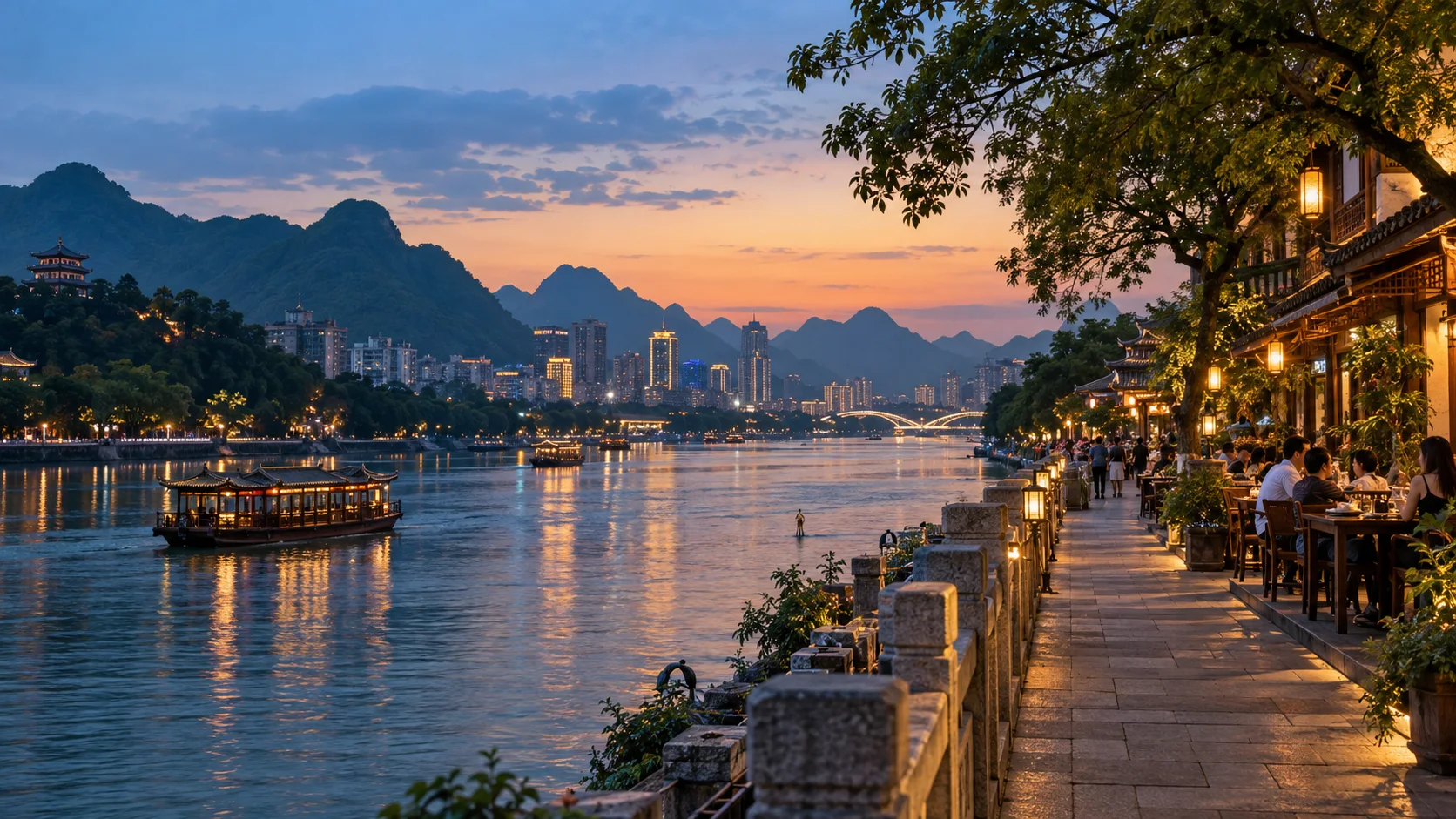
A Southern China route works best when each stop adds a new flavour rather than another rushed transfer. In 10–14 days, travellers can pair Chengdu’s tea houses and panda culture with Chongqing’s rivers and hills, then follow the Pearl River corridor through Guangzhou and Shenzhen before finishing in Hong Kong. The high-speed network makes the outline practical, but a comfortable trip still depends on choosing fewer bases and leaving room for meals, weather and people.
How to pace the route
Allow three nights in Chengdu, two in Chongqing, two in Guangzhou, one or two in Shenzhen and three in Hong Kong. That gives the journey a clear rhythm: a slow start in Sichuan, a city-and-food middle, then a harbour finish. Travellers with seven or eight days can combine Chengdu and Chongqing, select one Pearl River city and end in Hong Kong. For a longer trip, add a day in Guizhou or the coast around Xiamen instead of adding another one-night stop.
Days 1–3: Chengdu, tea-house time and an early panda visit
Use the first morning for a reputable panda research base, then return to the centre for People’s Park, a tea house and a relaxed Sichuan meal. Keep one afternoon open for neighbourhoods rather than filling every hour. Our Chengdu panda and tea-house guide has ideas for pairing the main visit with an easier city day. If your group prefers heritage to food, a day trip to Dujiangyan or Sanxingdui can replace the slower afternoon.
Days 4–5: Chengdu to Chongqing, then see the city at two levels
High-speed trains connect Chengdu and Chongqing in roughly one to two hours depending on the service and station. Check the exact departure station before booking: both cities have more than one rail hub, and a central hotel may be closer to a different station than expected. In Chongqing, combine a daytime riverside orientation with an evening viewpoint, then leave a half-day for hillside lanes, a teahouse or a food walk. The Chongqing guide explains how to enjoy hotpot while keeping the schedule manageable.
Days 6–7: Guangzhou for Lingnan history and Cantonese food
Continue south by high-speed rail and settle in Guangzhou for two nights. Liwan, the Chen Clan Ancestral Hall and Shamian Island make a useful first-day sequence; a Pearl River walk or cruise adds a quieter evening. Dim sum is easier when dietary needs are shared before the meal, and a local guide can explain the difference between a quick morning tea and a longer Cantonese tasting. See our Guangzhou Cantonese culture guide before choosing the neighbourhood that fits your group.
Days 8–9: Shenzhen, with a deliberate change of pace
Guangzhou and Shenzhen are close by rail, but it is still worth treating Shenzhen as its own city rather than a shopping stop. Spend part of a day in a creative district or public park, then use a full day for the Dapeng Peninsula when the weather and traffic allow. The route can work as an overnight stay or a day trip, depending on luggage and your preferred hotel rhythm. Our Shenzhen city and coast guide includes a slower alternative for families and older travellers.
Days 10–12: Hong Kong as a harbour-and-hills finale
Choose the final connection only after checking the entry requirements for your passport and the exact cross-border service. Keep a buffer around the transfer, especially with children or checked luggage. In Hong Kong, pair Central, Victoria Harbour and the Peak with an island ferry, a market or a country-park walk. The Hong Kong and mainland itinerary guide covers the practical sequence, while a short extension to Macau works best when you can spare at least one full day.
High-speed rail details that make the route easier
- Match the station name to the hotel and route, since a city may have several stations.
- Keep passport details exactly the same across bookings and carry the document used for the ticket.
- Arrive with enough time for station security and platform changes; large hubs can take longer to cross than the train ride suggests.
- Store hotel names and station names in Chinese, and keep one offline copy of the itinerary.
- Build a flexible meal or rest period after each transfer instead of booking an attraction immediately after arrival.
Rail schedules, border procedures and attraction reservations change. Verify the current information through official channels before payment, then let a local specialist adjust the sequence around your arrival times, walking pace and food preferences.
中文导读
这条华南路线适合安排 10 至 14 天:成都看熊猫、喝茶,重庆体验两江与山城街巷,再沿高铁南下到广州、深圳,最后在香港用维港、离岛和郊野步道收尾。每座城市建议至少住两晚,并提前核对车站名称、证件信息和跨境要求。高铁班次、口岸安排和景区预约可能变化,购票前请以官方信息为准。

